Should Graco Build in Argentina? Why the Smart Move Is to Buy Options, Not Factories
Argentina cut inflation from 211% to 31.5% and reopened to foreign capital. Should a premium industrial firm like Graco build there? A data-driven entry playbook, and why the answer is a ladder, not a plant.

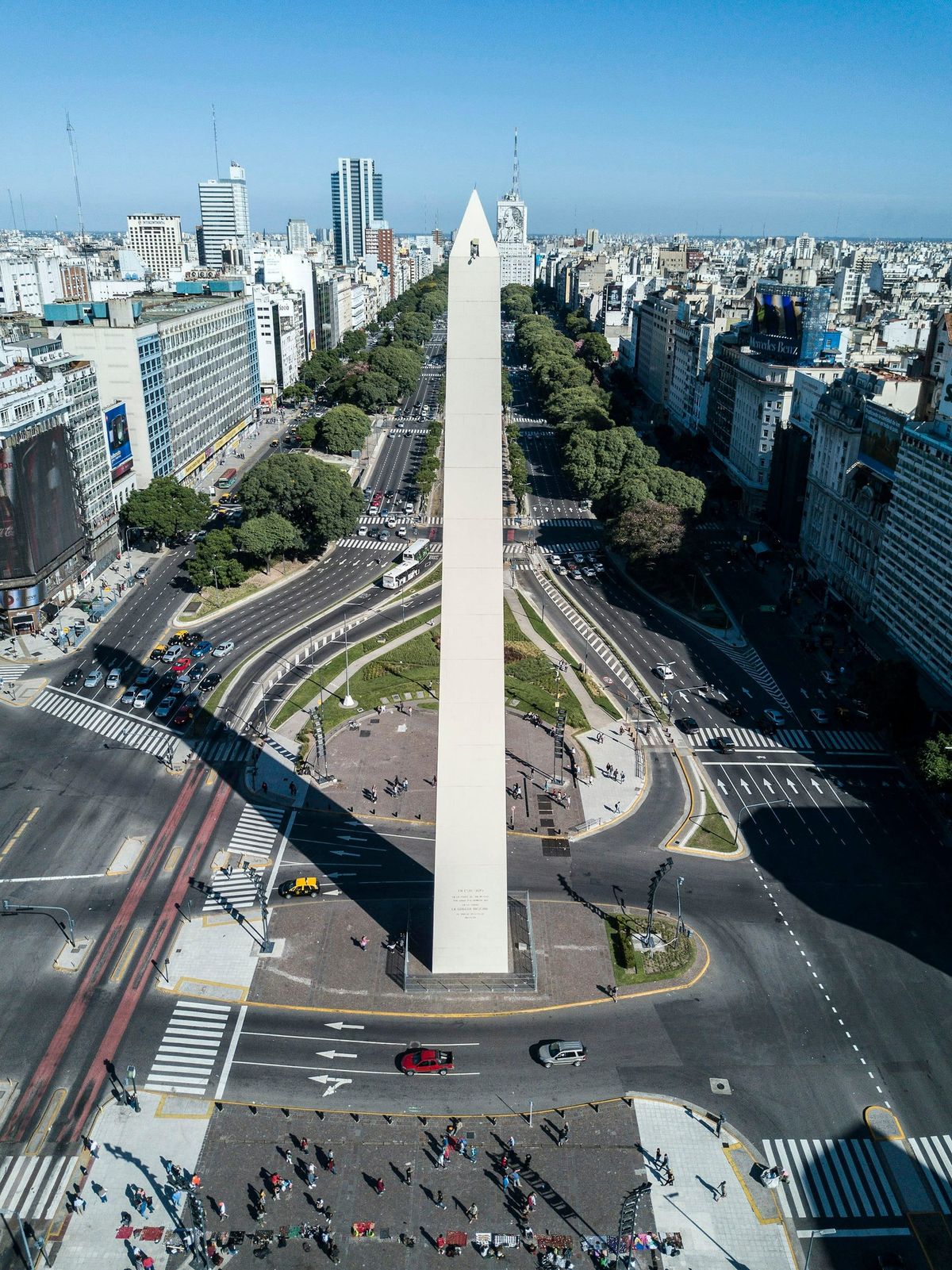
In December 2023, Argentine consumer prices were rising at 211% a year. Three years earlier, Walmart had sold its Argentine stores and booked roughly a billion dollars in losses on the way out, most of it currency. That same year Nike quietly handed its Argentine business to a local distributor. For most of the last decade, "Argentina strategy" in a boardroom meant one thing: how do we limit our exposure?
That question no longer fits the facts. Inflation closed 2025 at 31.5%, the lowest in eight years. The government posted a second straight full-year financial surplus. Construction, after its worst year on record, grew again. Firms that had been trapped for years can now send 2025 profits home. And a new incentive regime has drawn roughly US$30 billion of approved investment, with more than US$110 billion more under review.
So the question for a company like Graco Inc., the Minneapolis-based maker of premium fluid-handling and spray equipment, has changed from "should we stay away?" to "how deep should we go, and when?" I first worked through this as a foreign expansion assessment. This post is the long version, updated with 2026 data. My answer is more specific than "it depends": Graco should not build a plant in Argentina in 2026. It should buy a sequence of cheap, reversible options, each one unlocked by evidence rather than optimism.
Key takeaways
- The macro story is real but young. Inflation fell from 211.4% (2023) to 31.5% (2025); construction swung from −27.4% to +6.3%. Country risk is still around 470 basis points, and reserves are thin.
- The policy that helps Argentina most may hurt the case for a factory. The February 2026 U.S.–Argentina trade deal removes Argentine tariffs on U.S. machinery, which makes exporting from Minnesota cheaper, not local production.
- RIGI is built for mines and pipelines, not mid-size industrials. Its US$200 million minimum is far above any sensible Graco footprint. But the projects it attracts are exactly Graco's industrial customers.
- The right entry mode is a ladder: upgrade the channel now, then own the customer, then localise the last mile, then (maybe) commit capital, with each rung gated by measurable triggers.
1. The firm: what Graco brings, and what it cannot afford to lose
Graco, founded in 1926, designs and manufactures equipment that moves, measures, controls, dispenses and sprays fluids and powders: paint sprayers for contractors, proportioners for polyurethane foam, sealant and adhesive dispensing systems, and automatic lubrication systems for mining and industrial fleets. It competes on differentiation: products that save customers labour, material and energy, backed by engineering and service that justify a premium price.
The financial profile shows how well that works. In 2025 Graco reported US$2.24 billion in net sales, up 6%, and net earnings of US$522 million. Operating margin was roughly 28%, which is exceptional for an industrial manufacturer. Acquisitions added about five points of growth. The largest was Italy's Corob, a maker of paint-tinting and dispensing systems and Graco's biggest deal in more than a decade.
Two structural features matter for Argentina. First, Graco makes things at home. More than 75% of production is in the United States, with supporting plants in Switzerland, Italy, China, India, Belgium and Romania. Keeping engineering next to the factory floor is part of how it protects quality and margin. Second, Graco sells through others. Most international revenue flows through independent distributors, supplemented by direct sales teams. In Bartlett and Ghoshal's terms this is a transnational configuration: core technology is standardised globally, while selling and technical support are local.
Graco's competitive advantage isn't the steel in a sprayer. It is the bundle of product engineering, application know-how, uptime and after-sales service. That bundle is fragile in volatile markets, because it depends on technicians, spare parts and trained distributors being there when a contractor's rig goes down. Any Argentina plan has to protect that bundle first and capture volume second.
2. The country: what actually changed
Argentina's recent history is a lesson in institutional distance (Henisz, 2000; Peng, Wang & Jiang, 2008). The rules of the game, from exchange rates and import licences to profit repatriation, have changed so often that foreign firms priced in a permanent "Argentina discount." Here is what moved between 2023 and 2026.
Macro stabilization: dramatic, but not yet boring
Inflation fell from 211.4% in 2023 to 117.8% in 2024 and 31.5% in 2025. Monthly inflation hit 1.7% in August 2026, the lowest in 14 months, and BBVA Research expects about 29% for the full year. Read that last number carefully, though. Disinflation has slowed. Core inflation was still running at 32% year-on-year in mid-2026. Getting from 200% to 30% was the dramatic part; getting from 30% to single digits is the part that tests whether stabilization is durable.
The fiscal side is stronger. Argentina closed 2025 with a primary surplus of 1.4% of GDP and an overall financial surplus of 0.2%: two consecutive years in the black on a cash basis, the first time since 2008. GDP grew 4.4% in 2025 after shrinking 1.7% in 2024. The government projects 5% for 2026; the IMF says 4%.
The cepo is cracking, not gone
For a foreign investor, the single most important institutional change is the partial lifting of capital controls, the cepo. Since April 14, 2025, under Central Bank Communication "A" 8226, companies can buy dollars at the official market to remit dividends, but only on earnings from fiscal years starting on or after January 1, 2025. The effect was immediate once those profits existed: companies remitted US$869 million in dividends in March 2026, US$460 million of it from energy firms that had been unable to pay shareholders for almost seven years.
But several restrictions remain for corporations. Companies cannot buy dollars to hold. Pre-December 2023 intercompany debts are still channelled through BOPREAL bonds. Service payments to related companies must wait 90 days before accessing the official market. A 90-day "cross-restriction" still links official and parallel FX markets. For a multinational that bills its subsidiary for engineering, software or brand royalties, the 90-day rule on related-party services is not a footnote. It is a working-capital tax on exactly the transfer-pricing model Graco would use.
| Indicator | Then | Now | What it means for Graco |
|---|---|---|---|
| Annual inflation | 211.4% (2023) | 31.5% (2025); ~29% forecast for 2026 | Peso pricing is possible again, but list prices still need monthly review |
| Monthly inflation | 25.5% (Dec 2023) | 1.7% (Aug 2026) | Distributor credit terms of 60–90 days become viable |
| Fiscal balance | Chronic deficits | +1.4% primary, +0.2% overall (2025) | Lower risk of the money-printing that drove past crises |
| Real GDP | −1.7% (2024) | +4.4% (2025); 4–5% forecast for 2026 | Demand is growing from a low base |
| Construction (ISAC) | −27.4% (2024) | +6.3% (2025) | Contractor equipment demand is recovering, not booming |
| Dividend remittance | Blocked | Allowed for 2025+ earnings | Profits from a new subsidiary could be repatriated |
| Country risk (EMBI) | 1,906 bp (end-2023) | 469 bp (Aug 2026) | Cost of capital still well above regional peers |
| FX reserves | Negative net | ~6% of GDP vs. 16.3% regional average | The main tail risk to the whole story |
RIGI: a powerful incentive aimed at someone else
The Régimen de Incentivo para Grandes Inversiones (RIGI), created under the 2024 Ley de Bases, is the headline investment tool. It offers a 25% corporate income tax rate instead of 35%, 30 years of tax, customs and FX stability, duty-free imports of capital goods, and growing freedom over export proceeds. As of June 2026, 16 projects worth US$29.9 billion had been approved and 25 more worth US$111 billion were under evaluation. Nine of the approved projects are mines; three are oil and gas. A proposed "Super RIGI" goes further for new industries such as semiconductors, batteries and data centres.
| Feature | RIGI (2024) | Super RIGI (proposed May 2026) |
|---|---|---|
| Minimum investment | US$200 million | US$1 billion |
| Corporate income tax | 25% (vs. 35% standard) | 15% |
| Stability guarantee | 30 years (tax, customs, FX) | 30 years, plus offshore arbitration |
| Export proceeds freely available | 100% from year 4 | 20% year 1, 40% year 2, 100% year 3 |
| Target sectors | Mining, oil & gas, energy, infrastructure, steel | AI, semiconductors, batteries, EVs, data centres, advanced biotech |
| Application window | Extended to July 8, 2027 | Pending legislation |
Here is the point most commentary misses. Graco does not qualify, and should not try to. A US$200 million commitment is roughly 40% of Graco's entire 2025 net earnings, for a market that today is a rounding error in its sales. RIGI is designed for lithium mines and LNG terminals, not for a mid-size equipment maker's assembly line. What RIGI does do is create Graco's customers. Mines need automatic lubrication systems for haul trucks. Pipelines and LNG plants need protective-coating application equipment. Steel and energy projects need dispensing, sealing and finishing systems. The opportunity is real, but it shows up as demand for imported, high-spec equipment, not as a reason to build locally.
The trade deal that weakens the case for a factory
On February 5, 2026, Argentina and the United States signed a reciprocal trade and investment agreement. Argentina committed to remove more than 220 levies on U.S. goods, including tariffs on U.S. machinery, chemical products and medical parts, in exchange for U.S. tariff relief and a larger beef quota. At signing, the deal still needed approval by Argentina's Congress.
Classic theory says multinationals often build abroad to jump tariff walls: if you can't export profitably, you produce inside the market. That logic is now running in reverse. If Graco's sprayers, proportioners and lubrication pumps can enter Argentina duty-free from Minnesota, the cost advantage of local manufacturing shrinks sharply, and so does the strategic reason to accept the institutional risk of fixed assets there. In Dunning's OLI terms (1988), Argentina's location advantage for production got weaker in 2026 even as its location advantage for sales got stronger.
3. Where the demand actually is
It's tempting to read "construction rebound" and picture Graco paint sprayers flying off the shelves. The reality is more nuanced, and more interesting.
- Contractor (architectural paint). The paints-and-coatings market is expected to grow about 4.5% a year through 2033 (IMARC Group). That is steady, not explosive. Residential construction is recovering slowly, and dollar-denominated building costs hit their highest level since 2008 after the 2023–24 peso adjustment. Airless sprayers are a labour-saving technology, and their adoption accelerates as real wages rise. That is a medium-term tailwind, not a 2026 boom.
- Industrial and protective coatings. This is the stronger near-term story. Vaca Muerta shale, new pipelines and LNG capacity, and lithium and copper projects in Jujuy, Salta, Catamarca, San Juan and Mendoza all need corrosion protection, sealing and fluid handling built to international specifications. Buyers on these projects are often global EPC contractors who already specify Graco equipment elsewhere.
- Lubrication and mining. A mine running 24/7 measures automatic lubrication in avoided downtime. This is a direct fit for Graco's lubrication systems, and RIGI's nine approved mining projects are a ready-made target list.
- Tinting and dispensing. The Corob acquisition gives Graco point-of-sale tinting systems for paint retailers. As Argentine paint brands modernise distribution, this is a natural adjacency, and it is sold to companies rather than to individual contractors.
The pattern is clear. Near-term demand is concentrated in large, specification-driven industrial buyers, served best by technical sales and service capability. It is not concentrated in mass-market volume that would justify local manufacturing scale.
4. What the theory says, and where it breaks
International business offers a well-worn toolkit for this decision. It is worth using properly, because each lens points somewhere slightly different.
| Lens | Core question | Applied to Graco in Argentina | Implication |
|---|---|---|---|
| OLI / eclectic paradigm (Dunning, 1988) | Does the firm have an advantage worth exploiting, a reason to locate abroad, and a reason to do it in-house? | Ownership: strong (engineering, brand, service). Location: strong for sales, weak for production after the tariff deal. Internalisation: rising, because service quality is hard to contract. | Internalise service and selling, not manufacturing. |
| CAGE distance (Ghemawat, 2001) | How different are the markets culturally, administratively, geographically and economically? | Administrative and economic distance are high (FX regime, legal volatility, inflation). Cultural distance is moderate. Geographic distance is high but offset by a Brazil presence. | Distance favours partners with local knowledge. |
| Institution-based view (Peng et al., 2008; Henisz, 2000) | How credible and stable are the formal rules? | Rules are improving fast, but they rely on one administration's reforms, with a presidential election in 2027. | Credibility is not yet established; value reversibility. |
| Liability of foreignness (Zaheer, 1995) | What extra costs does a foreign firm bear? | Navigating customs, FX rules, labour law and payment practices without local relationships. | Distributors are a hedge against LoF, until they become a bottleneck. |
| Uppsala model (Johanson & Vahlne, 2009) | How does commitment evolve with knowledge? | Graco's Argentine market knowledge sits mostly inside its distributors. | Build knowledge first; commitment follows. |
| Real options (Kogut, 1991) | What is the value of waiting, and of keeping the right to expand? | Uncertainty is high but resolving quickly; small positions preserve the right to scale up. | Stage the investment; pay for options, not for the full bet. |
The useful insight comes from where the lenses disagree. OLI and the institution-based view say "control the customer relationship." CAGE and liability of foreignness say "lean on locals." Real options and Uppsala resolve the tension: control what is cheap to control and costly to lose (technical service, customer data, pricing discipline), and defer what is expensive and hard to reverse (plants, large inventories, peso-denominated debt).
5. Choosing the entry mode
The textbook menu runs from exporting to wholly owned greenfield plants. Scored against Argentina's 2026 conditions, the options look like this:
| Entry mode | Control of service | Capital at risk | Reversibility | FX & repatriation exposure | Fit today |
|---|---|---|---|---|---|
| Status quo: independent distributors | Low | Very low | Very high | Very low | Under-serves industrial demand |
| Upgraded master distributor + Graco technical presence | Medium | Low | High | Low | Best fit now |
| Sales & service subsidiary | High | Low–medium | Medium | Medium (90-day service rule) | Next step, gated by triggers |
| Acquire a local distributor | High | Medium | Low–medium | Medium–high | Opportunistic option |
| Manufacturing JV | Medium | Medium–high | Low | High | Premature |
| Greenfield plant | Very high | High | Very low | Very high | Not justified (no tariff wall) |
6. What others learned the hard way
Argentina has been a graduate school in entry-mode economics for multinationals. Three cases stand out.
| Company | What happened | Mode | Lesson for Graco |
|---|---|---|---|
| Walmart | Sold its Argentine business to Grupo de Narváez in November 2020 after 25 years, booking a non-cash, after-tax loss of about US$1 billion, mainly from currency. | Wholly owned, asset-heavy | Fixed assets turn currency risk into balance-sheet risk. The exit was the expensive part. |
| Nike | In February 2020, moved Argentina, Chile and Uruguay to distributor partnerships (Grupo Axo), calling the model more profitable and capital-efficient. | Owned → distributor | A premium brand can keep its positioning while shifting country risk to a capable local partner. |
| Energy firms (2026) | Remitted US$460 million in dividends in March 2026, after almost seven years of blocked transfers. | Local operations, often RIGI-linked | Repatriation now works, but only for new earnings. Old trapped cash stayed trapped for years. |
Taken together: firms that held assets in Argentina paid for volatility, and firms that held relationships kept their options. Graco's distributor-centric model is already on the right side of that line. The task is to strengthen the relationship without converting it into assets too early.
7. The recommendation: a four-rung entry ladder
Rung 1: Upgrade the channel (start now)
Consolidate Argentine distribution under one or two master distributors with exclusivity tied to performance. Graco then pays for two or three of its own application engineers based in Buenos Aires, plus a Neuquén presence for Vaca Muerta. Co-fund a demonstration and repair centre and a spare-parts buffer stock held by the distributor. Target the RIGI project list directly through EPC contractors. Cost: low single-digit millions of dollars, almost all of it operating expense and easy to stop.
Rung 2: Own the customer (Trigger A)
Set up a small sales and service subsidiary that holds key accounts, runs a training academy for contractors, and manages pricing in pesos. This turns distributor knowledge into Graco knowledge, which is the Uppsala mechanism, without large fixed assets.
Rung 3: Localise the last mile (Trigger B)
Add light assembly, kitting and configuration, and roll out Corob-style tinting systems with Argentine paint brands. Local content then responds to customer needs rather than tariffs.
Rung 4: Commit capital (Trigger C)
Only now consider acquiring a distributor or a manufacturing joint venture. Size it for Mercosur export, using Graco's Brazilian presence, rather than for Argentina alone.
| Trigger | Unlocks | Evidence required | Status (Oct 2026) |
|---|---|---|---|
| A | Rung 2 | Monthly inflation ≤2% for six straight months; dividend remittances working for four consecutive quarters; EMBI under 500 bp | Partly met: 1.7% in Aug; remittances flowing since 2026; EMBI 469 bp |
| B | Rung 3 | U.S.–Argentina trade agreement ratified; 90-day rule on related-party services removed; Argentine sales reach scale for local assembly | Pending: needs congressional and BCRA action |
| C | Rung 4 | Policy continuity through the 2027 presidential election; EMBI under 400 bp; two straight years of construction growth; reserves rebuilt toward regional norms | Not met: earliest realistic test is 2028 |
8. What would change my mind
A good strategy names its failure conditions in advance. Four things would make me revise this view.
- Faster-than-expected credibility. If country risk drops below 400 bp, Argentina returns to global debt markets, and corporate controls go fully, the value of waiting falls. Graco should then climb the ladder faster, perhaps by acquiring a distributor early.
- A competitor moves first. If a rival locks up the best distributors or the main EPC relationships around RIGI projects, the option to wait loses value. Pre-emption can justify an earlier Rung 2.
- The trade deal fails. If Congress rejects the agreement and Argentina re-raises machinery tariffs, the tariff-jumping logic for local assembly comes back.
- Political reversal in 2027. A return to price controls, import licensing or a new cepo would show that the ladder was the right design: Graco would have lost a few million in operating costs, not a plant.
The bottom line
Argentina in 2026 is the most investable it has been in a generation, and that is precisely why it's dangerous to over-commit. The improvements are real: inflation down by more than 85% in two years, budget surpluses, dividends flowing again, a trade deal with the United States. But they are recent, concentrated in one administration, and resting on thin reserves.
For Graco, the winning move is to treat Argentina as a portfolio of options rather than a single bet: invest in people, service and relationships now; let observable evidence, not narrative, pull more capital in; and keep the plant on the drawing board until the country has proved it can stay boring. In emerging markets, the firms that win are rarely the ones that arrive first with the most concrete. They're the ones still standing, with their customers, when the next cycle turns.
About this analysis: This post expands a foreign expansion assessment I prepared on Graco and Argentina, updated with data available through September 2026. It is an independent strategic analysis, not investment advice, and is not affiliated with or endorsed by Graco Inc.
References
Bartlett, C. A., & Ghoshal, S. (1989). Managing across borders: The transnational solution. Harvard Business School Press.
BBVA Research. (2026, January). Argentina: Inflación diciembre 2025. bbvaresearch.com
BBVA Research. (2026, September 10). Argentina: August inflation 1.7% MoM, the lowest in 14 months. bbvaresearch.com
BBVA Research. (2026, March). Real estate and construction outlook 2026. bbvaresearch.com
Bloomberg. (2020, November 6). Walmart joins Argentina corporate exodus after selling unit. bloomberg.com
Bloomberg Línea. (2025). La construcción se desplomó en Argentina durante 2024 ante mayores costos en dólares. bloomberglinea.com
Buenos Aires Herald. (2026). Argentina posted fiscal surplus of 1.4% of GDP in 2025. buenosairesherald.com
Buenos Aires Herald. (2026, August 14). Argentina's return to global debt markets is delayed again. buenosairesherald.com
Buenos Aires Times. (2026, February). Argentina says it signed US trade deal with Trump. batimes.com.ar
DLA Piper. (2026, June 22). Super RIGI: Argentina's new investment incentive framework for future industries. dlapiper.com
Dunning, J. H. (1988). The eclectic paradigm of international production: A restatement and some possible extensions. Journal of International Business Studies, 19(1), 1–31.
Ghemawat, P. (2001). Distance still matters: The hard reality of global expansion. Harvard Business Review, 79(8), 137–147.
Graco Inc. (2026). 2025 annual report and Form 10-K. investors.graco.com
Graco Inc. (2026, January 26). Graco finishes year with record quarterly and annual sales [Press release].
Henisz, W. J. (2000). The institutional environment for multinational investment. Journal of Law, Economics, and Organization, 16(2), 334–364.
IMARC Group. (n.d.). Argentina paints and coatings market.
Infobae. (2026, June 24). Tras casi siete años de cepo cambiario, las empresas energéticas reactivaron la transferencia de dividendos al exterior. infobae.com
Johanson, J., & Vahlne, J.-E. (2009). The Uppsala internationalization process model revisited: From liability of foreignness to liability of outsidership. Journal of International Business Studies, 40(9), 1411–1431.
Kogut, B. (1991). Joint ventures and the option to expand and acquire. Management Science, 37(1), 19–33.
Ministerio de Relaciones Exteriores, Comercio Internacional y Culto. (2026, February). Resumen de indicadores económicos (INDEC data). cancilleria.gob.ar
Net Zero Circle. (2026, June). Argentina RIGI pipeline tops USD 140 billion. netzerocircle.org
NIKE, Inc. (2020, February 6). NIKE, Inc. announces strategic distributor partnerships in Brazil, Argentina, Chile and Uruguay [Press release]. investors.nike.com
Peng, M. W., Wang, D. Y. L., & Jiang, Y. (2008). An institution-based view of international business strategy: A focus on emerging economies. Journal of International Business Studies, 39(5), 920–936.
Rava Bursátil. (2023, December 29). Riesgo país: cotización histórica. rava.com
U.S. Department of State. (2025). 2025 investment climate statements: Argentina.
Zaheer, S. (1995). Overcoming the liability of foreignness. Academy of Management Journal, 38(2), 341–363.